- No products in the cart.

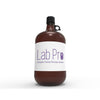













Stronger isn't always better, especially with nitric acid. The difference between 70% and 90% concentration goes beyond strength; it directly affects reactivity, oxidation potential, stability, and safety requirements.
Higher concentrations can drive more aggressive reactions, but they also introduce greater hazards, stricter handling protocols, and more stringent regulatory considerations. Choosing incorrectly can lead to inefficient processes, material incompatibility, or serious safety risks.
This guide provides a clear, practical comparison of 70% and 90% nitric acid, explaining how each concentration behaves, where it performs best, and how to select the right option based on application, safety, and operational needs.
Key Takeaways
- 70% nitric acid is stable, widely used, and suitable for most laboratory and industrial applications
- 90% nitric acid is highly reactive, less stable, and used only for specialized processes
- Higher concentration increases oxidation strength but also significantly raises safety risks
- Water content in 70% acid improves stability and reduces hazardous gas release
- 90% nitric acid produces toxic NO₂ fumes and requires stricter handling and storage
- Choosing the wrong concentration can lead to poor results, equipment damage, or safety incidents
- Purity grade is just as important as concentration for accurate and reliable outcomes
- Proper PPE, ventilation, and storage are critical for both concentrations
- Always match nitric acid concentration to the specific application, not just "stronger is better."
Understanding Nitric Acid Concentration: What The Percentages Actually Mean

Nitric acid concentration is expressed as weight/weight (w/w), grams of HNO₃ per 100 grams of solution. This differs from volume percentage and matters in practice because solution density changes with concentration, affecting process calculations.
At 70% (w/w), nitric acid contains about 15.8 moles of HNO₃ per liter. It is a clear to pale yellow liquid that remains stable under normal storage conditions. The ~30% water content helps stabilize the solution, limits decomposition, and reduces nitrogen dioxide (NO₂) off-gassing.
At 90% (w/w), the concentration exceeds 23 moles per liter, with less than 10% water. This is classified as fuming nitric acid. Above ~86%, nitric acid releases visible reddish-brown NO₂ vapors at room temperature. Lower water content makes it less stable, more reactive, and significantly more hazardous.
"Fuming" does not simply mean more concentrated; it indicates active decomposition under normal conditions, with continuous release of toxic gas. This is why 70% and 90% nitric acid are treated as distinct chemical products rather than just different strengths.
How Strong Is Nitric Acid At 70% VS. 90%?
Understanding "How strong is nitric acid" at each concentration requires separating two distinct chemical roles: its function as an acid (proton donor) and its function as an oxidizing agent (electron acceptor). Nitric acid's industrial value comes primarily from the second role.

A useful way to frame how strong nitric acid is at each concentration: 70% is a precision instrument; 90% is a specialized tool. One is broadly applicable, the other is reserved for tasks where its unique reactivity profile is specifically required.
Applications Where 70% Nitric Acid Excels
The 70% concentration is the workhorse of nitric acid chemistry, accounting for the vast majority of commercial and laboratory consumption. Its applications span several major industries:
-
Metal treatment and passivation: Stainless steel passivation per ASTM A967 standards typically calls for 20–50% nitric acid solutions, prepared by diluting 70% stock. The 70% concentration provides sufficient oxidizing power to dissolve free iron from stainless steel surfaces and promote the formation of a uniform chromium oxide layer. In precious metal refining, 70% nitric acid selectively dissolves silver and base metals from gold alloys in the inquartation process.
-
Analytical chemistry and laboratory digestion: For sample preparation for ICP-MS, ICP-OES, and atomic absorption spectroscopy, 65–70% ACS- or TraceMetal-grade nitric acid is the standard. Its oxidizing strength completely destroys organic matrices, liberating metals into solution for accurate trace analysis. Lower concentrations leave incomplete digestion; higher concentrations offer no advantage and introduce handling complexity.
-
Medical laboratories and standards: At 70%, nitric acid is the concentration of choice for preparing reference standards in trace element analysis, cleaning laboratory glassware, and preparing surfaces for microscopy. Its reliability and predictability under standard conditions make it far more practical for routine lab work than fuming grades.
-
Electronics and PCB manufacturing: 70% nitric acid (typically prepared to a 10–30% working concentration) is used to etch copper traces on printed circuit boards and to clean metal contacts. For most PCB applications, the 70% stock provides the correct dilution target and maintains purity consistency.
- Fertilizer production: The largest single use of nitric acid globally is at 50–68% concentrations, derived from 70% stock or produced directly by the Ostwald process at standard output concentrations.
Applications Where 90% Nitric Acid Is Required
The 90% concentration is not a substitute for 70% in most applications. It is a specialized reagent for processes where its unique properties are specifically necessary.
Nitration of organic compounds: Production of explosives (TNT, RDX, nitroglycerin), polyurethane precursors, and pharmaceutical intermediates requires mixed-acid nitration with nitric acid (90%+ in sulfuric acid). Higher concentration is needed to generate sufficient nitronium ions (NO₂⁺). At 70%, water suppresses this reaction, lowering the yield.
Rocket propellants and aerospace: Red Fuming Nitric Acid (RFNA), typically above 85–90%, is used as a hypergolic oxidizer in rockets and missiles. Its high reactivity enables ignition on contact with fuel, eliminating the need for an ignition system.
High-purity semiconductor cleaning: Some wafer cleaning processes require fuming nitric acid to remove resistant contaminants. The higher oxidizing strength enables faster, more complete cleaning.
Specialized etching: Concentrated nitric acid is used for etching metals and silicon, where faster, more aggressive reactions are needed for precise feature definition.
Also, read:
- The Science Behind Ethyl Alcohol In Laboratory Settings
- What Is A Centrifuge Tube And What Is It Used For?
- Lab Glassware Cleaning and Sterilization: A Step-by-Step Guide
Purity Grades Within Each Concentration
Understanding how strong nitric acid is is only part of the selection equation. Purity grade matters as much as concentration for many applications. Both 70% and 90% nitric acid are available in multiple purity tiers:
| Grade | Typical Use | Key Impurity Limits |
|---|---|---|
| Technical Grade | Industrial processes, fertilizers | Fe ≤ 10 ppm; Cl⁻ ≤ 50 ppm |
| ACS Reagent Grade | General laboratory | Fe ≤ 0.5 ppm; heavy metals ≤ 1 ppm |
| TraceMetal Grade | ICP-MS, environmental testing | Individual metals ≤ 0.01 ppb |
| Semiconductor/SEMI Grade | Wafer cleaning, cleanroom | Total metals ≤ 10 ppt |
Using technical-grade acid for ICP-MS analysis will contaminate samples and invalidate results. Using SEMI-grade for industrial steel pickling wastes significant cost with no process benefit. Match the grade to the application's actual sensitivity requirements, not to a general preference for "higher quality."
Safety: How Handling Differs Between 70% And 90%
Both concentrations are classified as Class 8 Corrosive and Class 5.1 Oxidizer under DOT regulations, but the practical safety differences between them are substantial.
At 70%, NO₂ off-gassing is manageable with standard fume hood ventilation. The acid can be stored in HDPE, glass, or PTFE containers. Standard PPE, nitrile or butyl gloves, splash goggles, and a lab coat, is sufficient for routine handling.
At 90%, continuous NO₂ release creates an immediate inhalation hazard, even in sealed containers. Full-face respirators with acid gas cartridges are required for open handling. Storage should use fluoropolymer-lined or glass containers, as HDPE degrades more quickly. Containers must be vented or opened carefully to prevent pressure buildup. Spills are more dangerous, with faster tissue damage and the potential for ignition upon contact with organic materials.
Critical incompatibility: Never mix nitric acid with acetone, alcohols, acetic anhydride, or other organic solvents. Even at 70%, reactions can be violently exothermic or form unstable compounds. At 90%, reactions can be immediate and explosive.
Choosing The Right Concentration: A Decision Framework
| If your application is... | Use this concentration |
|---|---|
| ICP-MS / trace metal analysis | 70% ACS or TraceMetal Grade |
| Stainless steel passivation | 70% (diluted to working concentration) |
| Precious metal refining | 70% Technical or ACS |
| PCB etching or electronics cleaning | 70% ACS (diluted to 10–30%) |
| Fertilizer production | 65–70% Technical |
| Medical laboratory standards | 70% ACS |
| Organic nitration (explosives, polymers) | 90% (mixed acid system) |
| Rocket propellant oxidizer | 90%+ RFNA (Mil-Spec) |
| Fine art etching or specialized metallurgy | 90% (application-specific) |
| General industrial cleaning/pickling | 40% or diluted 70% Technical |
The difference between 70% and 90% nitric acid is not just quantitative; it is qualitative. Understanding how strong nitric acid is at each concentration means recognizing that 70% is stable and widely applicable in industrial and laboratory settings, while 90% is highly reactive and reserved for specialized applications such as nitration and aerospace. Choosing the right concentration, purity grade, and safety measures is essential for both effective performance and responsible chemical management.
At Lab Pro, we support laboratories and industrial operations with reliable access to high-purity acids, specialty chemicals, and the equipment required for safe, compliant handling. From ACS and TraceMetal-grade nitric acid to cleanroom supplies and PPE, our solutions are designed to maintain consistency, minimize contamination, and support precision across critical workflows.
Our Vendor-Managed Inventory (VMI) services ensure essential materials are always available, helping reduce downtime and maintain uninterrupted operations. By combining dependable supply with proactive inventory management, Lab Pro enables teams to focus on performance, safety, and regulatory compliance.
Simplify your chemical sourcing and eliminate supply disruptions.
Explore Lab Solutions
FAQs
How strong is nitric acid compared to other common mineral acids like hydrochloric acid or sulfuric acid?
All three are strong acids that fully dissociate in water, but "strength" in nitric acid's case includes its oxidizing power, which HCl and H₂SO₄ largely lack. How strong is nitric acid as an oxidizer? Strong enough to dissolve copper and silver, metals that neither HCl nor dilute H₂SO₄ can attack. Sulfuric acid is a stronger dehydrating agent but is not an oxidizer in dilute form. Hydrochloric acid is a stronger proton donor in some contexts, but cannot oxidize metals. Nitric acid's dual role as both acid and oxidizer is what sets it apart.
Can I dilute 90% nitric acid to get 70% for laboratory use?
Technically, yes, but it is strongly discouraged unless you have the appropriate safety infrastructure in place. Diluting concentrated nitric acid must be done by adding acid slowly to water (never water to acid) in a fume hood with full PPE and cooling provisions. The exothermic heat of dilution can be significant. For most laboratories, it is safer and more economical to purchase pre-made 70% acid than to handle fuming acid unnecessarily. The question of "How strong is nitric acid" after dilution is straightforward chemistry, but the hazard during dilution is the real concern.
Does the color of my nitric acid tell me anything about its concentration or quality? Yes. Fresh, properly stored nitric acid at any concentration should be colorless to very pale yellow. A deeper yellow or brown color indicates decomposition. This is more common and more rapid with 90% acid. Heavily discolored acid may have reduced oxidizing capacity and should be tested before use in critical applications. "How strong is nitric acid?" that has turned brown? Its effective concentration and consistency are compromised.
Is 90% nitric acid subject to stricter regulatory controls than 70%?
Yes. Under CFATS (Chemical Facility Anti-Terrorism Standards), nitric acid at concentrations of 68% or above is classified as a theft/diversion concern as an explosive precursor, with a screening threshold quantity (STQ) of 400 pounds. At 80%+, it additionally triggers a release-related STQ of 15,000 pounds. The 90% concentration, therefore, carries both release and theft-related regulatory obligations.
How strong is nitric acid's effect on stainless steel, and does a higher concentration give better passivation results?
Not necessarily. ASTM A967 passivation specifications for stainless steel typically call for nitric acid solutions in the 20–50% range, prepared from 70% stock. Using 90% nitric acid for passivation is not only unnecessary, but it can also actually over-etch the surface, causing pitting rather than a clean passive layer. "How strong is nitric acid" needed for passivation? Strong enough to dissolve free iron without attacking the chromium-rich alloy matrix.