- No products in the cart.
























From pathology labs to classrooms, compound light micariroscopes are essential tools for microscopic analysis. Choosing the right one, however, isn’t simple.
Options range from basic achromatic models to advanced research-grade systems, with prices spanning from a few hundred to tens of thousands of dollars. How do you find the right fit for your needs?
This guide cuts through the jargon to offer practical guidance on selecting a compound light microscope. Whether you’re equipping a new lab, outfitting student workspaces, or upgrading aging equipment, you’ll find a clear framework for making the right decision.
We’ll outline the benefits of light microscopes, address their limitations, and help you choose an instrument that delivers the best value for your application.
Key Takeaways:
-
The advantages of light microscope systems include ease of use, durability, and broad applicability.
-
Compound light microscopes support live specimen observation and simple sample preparation.
-
Light microscopes provide sufficient magnification and resolution for most biological and industrial work.
-
Modern light microscopes integrate easily with digital imaging and contrast techniques.
-
Understanding the limitations of light microscopes prevents over-specifying or misapplication.
-
Different users require different features—educational, clinical, research, and industrial needs vary.
-
Selecting a microscope based on real-world use delivers better value than chasing specifications.
-
The long lifespan and low maintenance requirements are key advantages of owning a light microscope.
Understanding Compound Light Microscopes

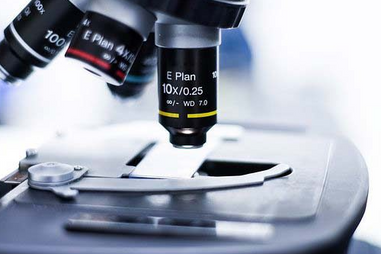
A compound light microscope uses multiple lenses, an objective near the specimen, and an ocular eyepiece to magnify objects beyond the resolution of the human eye. “Compound” distinguishes it from simple magnifiers, while “light” refers to visible illumination transmitted through the specimen from a built-in light source.
Unlike electron or confocal microscopes, compound light microscopes operate under normal atmospheric conditions with simple sample preparation. They typically provide 40× to 2000× magnification by combining objective lenses (4×, 10×, 40×, 100×) with 10× eyepieces, sufficient for examining cells, bacteria, tissues, and many materials.
These microscopes use brightfield illumination, producing dark specimens against a bright background. This intuitive design has remained largely unchanged for over a century because it reliably supports most applications in science, medicine, education, and industry.
Advantages Of Light Microscopes
The advantages of light microscopes explain why they remain essential across science, medicine, education, and industry. Despite advances in imaging technology, light microscopes offer a balance of performance, accessibility, and versatility that meets the needs of most laboratories.
Operational Benefits
-
Ease of Use: Compound light microscopes require minimal training and are intuitive to operate, making them suitable for education, routine lab work, and shared laboratory environments.
-
Live Specimen Observation: They allow real-time observation of living samples, such as microorganisms, blood flow, and crystallization processes, capabilities not possible with electron microscopy.
-
Simple Sample Preparation: Most specimens require minimal preparation, often limited to basic mounting or staining, which speeds analysis and lowers technical barriers.
Practical Advantages
-
Cost-Effective Access: Light microscopes enable multiple workstations without centralized facilities, supporting broader access across labs.
-
Compact Footprint: They occupy minimal bench space and require only standard electrical power.
-
Low Maintenance: Routine cleaning and basic alignment suffice. LED illumination eliminates bulb replacement, and no vacuum or cooling systems are required.
Application Versatility
-
Biological and Medical Use: Used for cell biology, microbiology, pathology, and medical diagnostics, including blood, tissue, and microorganism analysis.
-
Education: Foundational tools in secondary and higher education for teaching microscopy and biological concepts.
-
Industrial and Quality Control: Support inspection of pharmaceuticals, textiles, electronics, and materials with fast, non-destructive evaluation.
Technical Strengths
-
Digital Integration: Compatible with USB cameras and software for imaging, measurement, and analysis.
-
Advanced Contrast Techniques: Supports phase contrast, DIC, darkfield, and polarization to visualize transparent or specialized specimens.
-
Adequate Resolution: Delivers resolution near 200 nm, sufficient for most biological and industrial microscopy applications.
The advantages of light microscopes make them the most practical choice for everyday microscopy. Their ease of use, versatility, and reliable performance allow laboratories to generate accurate results without the complexity or cost of more specialized systems.
Understanding The Limitations
While the advantages of light microscopes make them indispensable for many applications, they are not universal solutions. Understanding their physical, optical, and operational limitations is essential for selecting the right microscopy tool and avoiding misapplication in advanced or specialized work.
-
Magnification Boundaries: Compound light microscopes provide up to ~2000× useful magnification; beyond this, empty magnification adds size without detail due to light’s wavelength limits. Structures below ~200 nm, such as viruses, proteins, and atoms, cannot be resolved without electron microscopy or specialized techniques. This limit rarely affects routine biological work but restricts viral and nanomaterial research.
-
Sample Preparation Constraints: These microscopes require thin, transparent specimens. Tissue samples must be sectioned to 5–10 micrometers, often requiring microtomes and training. Many biological samples also need staining to reveal structure. Opaque materials, such as metals and ceramics, cannot be examined directly and instead require reflected-light microscopes.
-
Image Quality Challenges: Unstained specimens often lack contrast, making them difficult to view without phase contrast or DIC, which adds cost. High magnification reduces brightness and depth of field, requiring stronger illumination and frequent refocusing. Lower-quality optics may introduce chromatic aberration, while corrected objectives increase system cost.
-
Operational Considerations: Working distance decreases at high magnification, increasing the risk of objective damage, particularly with oil immersion lenses. Regular maintenance remains necessary to prevent optical degradation from dust, oil, or misalignment. Compound microscopes are unsuitable for surface inspection, 3D dissection, fluorescence imaging, or viral research, all of which require specialized systems.
Recognizing the limitations of light microscopes helps set realistic expectations and guides better equipment decisions. When used within their optimal range, they deliver reliable results; when pushed beyond that range, specialized microscopy techniques are required. Knowing this boundary ensures accuracy, efficiency, and long-term value.
Matching Microscope To Application
Selecting the right microscope starts with understanding how it will be used. Matching the microscope’s capabilities to the application ensures accurate results and efficient workflows, while avoiding unnecessary complexity or cost.
Define Your Primary Use Case
Choosing the right microscope begins with a clear understanding of what you will examine most often. Different applications place different demands on optics, contrast methods, durability, and expandability.
-
Define your primary use: Microscope selection should reflect what you examine most often. A microbiology lab, a quality control operation, and an educational classroom all require different capabilities, durability, and flexibility.
-
Apply the 80/20 rule: Optimize your system for the applications you use most often. Avoid over-specifying for rare tasks that can be handled with shared equipment or outsourced services.
-
Match features to sample type: Sample characteristics determine requirements. Stained tissue sections are best viewed with brightfield microscopy; living cells require phase contrast, and birefringent materials, such as crystals or polymers, require polarization.
Optical System Quality Hierarchy

Essential Features By User Level
Different users place different demands on a microscope. Educational, clinical, research, and industrial environments each require specific features to support accuracy, efficiency, and long-term usability.
-
Student and educational use: Prioritize durability, simplicity, and cost. Monocular viewing is adequate, while binocular heads reduce eye strain. Mechanical stages, LED illumination, and rugged construction support frequent use. Identical units enable effective classroom instruction.
-
Clinical laboratory use: Emphasize comfort, accuracy, and efficiency. Binocular viewing and ergonomic heads reduce fatigue. Precise mechanical stages allow repeatable positioning, and digital imaging supports documentation. Plan achromatic optics deliver diagnostic-quality results at no extra cost.
-
Research applications: Focus on flexibility and expandability. Trinocular heads support cameras, multiple contrast techniques enable varied studies, and motorized components aid automation. Modular designs and higher-grade optics support evolving research needs.
-
Industrial quality control: Requires speed, repeatability, and measurement accuracy. Stable stages ensure consistent inspection, while calibrated optics or imaging software enable dimensional analysis. Durable construction and digital records support compliance and traceability.
Common Purchasing Mistakes to Avoid
Many microscope purchases fail due to avoidable decision errors. Knowing what to avoid helps ensure better performance and value.
-
Avoid over-specifying: Advanced features and premium optics add cost without practical benefit for many users. Mid-grade systems often meet real-world needs just as effectively.
-
Don’t ignore ergonomics: Poor ergonomics reduces productivity and leads to user fatigue. Always assess comfort for extended use.
-
Consider the total cost of ownership: A low purchase price can mask higher long-term costs from repairs, proprietary accessories, or limited upgrade paths.
-
Don’t prioritize magnification alone: Optical quality and mechanical precision matter more than magnification numbers. Higher magnification without resolution and contrast offers no real advantage.
When microscope features align with real-world applications, performance and value follow. Focusing on actual use cases, rather than specifications alone, leads to smarter purchases and more reliable outcomes throughout the instrument's life.
Making The Final Decision
Making the final microscope selection requires balancing application needs, budget, and future growth. By focusing on how the microscope will be used day to day, you can avoid unnecessary features while ensuring reliable performance.
-
What will you observe most often? Select a microscope optimized for your primary applications. Avoid over-specifying for rare needs and focus on what you use regularly, not hypothetical future requirements.
-
What is your total budget, including accessories? Account for objectives, immersion oil, slides, coverslips, cameras, and contrast accessories. The full system cost extends well beyond the base microscope price.
-
Will your needs change over the next 3 to 5 years? If growth is likely, choose modular systems with upgrade paths. If needs are stable, prioritize current functionality over unused flexibility.
-
Consult specialists when appropriate. For higher-value purchases, application consultations help align equipment with real needs. Vendor guidance may favor premium systems; independent consultants offer unbiased input.
-
Test before purchasing. Evaluate microscopes using your own samples whenever possible. Real-world testing reveals performance limitations that specifications alone may not show.
-
Assess service and support. Review warranty terms, service availability, and the quality of technical support. Local service reduces downtime and protects your long-term investment
Compound light microscopes remain essential because they offer the best balance of performance, accessibility, and versatility for most applications. By understanding the advantages and limitations of light microscopes, users can select systems that deliver accurate results without unnecessary complexity or cost. Defining real use cases and choosing features accordingly ensures long-term value across educational, clinical, research, and industrial environments.
At Lab Pro, we support laboratories with the equipment, consumables, and operational solutions needed for reliable microscopy and day-to-day laboratory work.
Our offerings include laboratory reagents, PPE, and supplies designed to meet the accuracy, durability, and consistency requirements of educational, clinical, research, and industrial environments.
To help labs operate efficiently, Lab Pro also provides Vendor Managed Inventory (VMI) services that ensure essential materials are always available when needed. By streamlining procurement and optimizing inventory levels, our VMI program reduces downtime and allows teams to focus on analysis, training, and research—not supply management.
Equip your lab with solutions built for reliability and performance.
Explore Our Products
FAQs
Can I use a compound light microscope for metallurgical or materials science applications?
Standard compound microscopes use transmitted light and are unsuitable for opaque materials such as metals and ceramics. Metallurgical microscopes use reflected light from above and are designed for materials analysis. While optically related, each serves different needs. For both biological and materials work, separate specialized microscopes deliver better results.
How do the advantages of light microscope systems compare to smartphone microscope adapters?
Smartphone microscope adapters offer portability and low cost, but they lack optical quality, stability, and magnification range. One key advantage of light microscope systems is their superior image clarity, precise mechanics, and magnification up to 2000×. Smartphone adapters are useful for quick checks, but they cannot replace laboratory-grade microscopes for serious work.
What is the realistic lifespan of a compound light microscope?
With proper care, compound light microscopes commonly last 15–30 years or longer. One of the major advantages of light microscope design is durability: optics age slowly, and most wear affects stages, focus mechanisms, or illumination. Many systems are replaced due to technological upgrades rather than mechanical failure, especially when purchased from established manufacturers.
Are Chinese-manufactured microscopes inferior to European or Japanese brands?
Manufacturing origin alone does not determine quality. Chinese manufacturers produce microscopes across the full quality spectrum. Premium brands offer consistent performance for demanding applications, while mid-tier Chinese brands provide excellent value. The advantages of light microscope markets today are different. The most prominent of which is choice: buyers can match performance, price, and support to their needs rather than focusing on origin.
What are the advantages of LED illumination over halogen bulbs?
LED illumination offers longer lifespan, lower heat output, stable color temperature, instant brightness, and reduced energy consumption compared to halogen. Maintenance needs are minimal, and user comfort improves during long sessions. While halogen may suit niche color-critical work, modern LEDs meet most microscopy requirements effectively.