- No products in the cart.















Whether you're a lab technician, procurement manager, or researcher in biotech, semiconductors, or aerospace, chances are you've relied on an Erlenmeyer flask.
These precision tools are essential across industries requiring compliance, safety, and operational uptime, and their importance is only growing, with the global laboratory glassware market projected to reach USD 2.45 billion by 2030.
Let’s break down the types, uses, and benefits of Erlenmeyer flasks, and how to select the right one for your high-stakes lab environment.
Key Takeaways
-
Erlenmeyer flasks are essential for compliant mixing, heating, and storage.
-
Their narrow neck and conical shape reduce spills and support cleanroom protocols.
-
Options include borosilicate, autoclavable plastic, screw-cap, and sterile culture designs.
-
For high-compliance environments, choose validated, lot-traceable flasks.
-
Lab Pro provides fast delivery, cleanroom-ready supplies, and stocking programs tailored to your industry.
What Is An Erlenmeyer Flask?
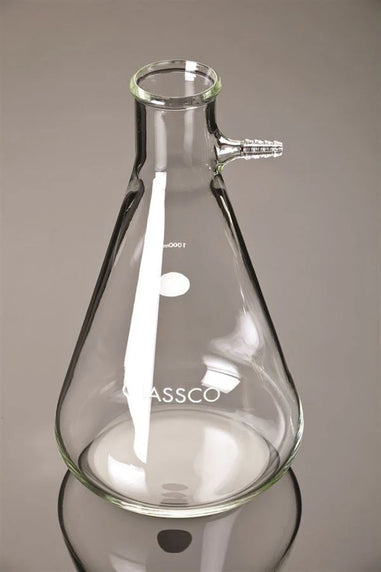
An Erlenmeyer flask is a conical laboratory vessel with a flat base and a cylindrical neck, engineered for efficient mixing and reduced contamination risk.
Named after German chemist Emil Erlenmeyer, these flasks are a staple in ISO-classified cleanrooms, chemistry labs, biotech production lines, and electronics R&D facilities.

Buy the Flask Erlenmeyer 5ML - F4901-0005 for limited-volume testing, titration studies, or pilot-scale development environments where control and accuracy are essential.
Benefits Of Using Erlenmeyer Flasks In Labs
From everyday research to high-stakes industrial applications, Erlenmeyer flasks offer practical advantages that enhance accuracy, safety, and efficiency in the lab.
-
Safe Mixing: Conical body allows swirling without spills, essential in titration and batch mixing.
-
Contamination Control: Narrow neck reduces air exposure; ideal for cleanroom and cell culture settings.
-
Storage-Ready: Can be sealed with caps or stoppers—critical in high-compliance labs.
-
Thermal Tolerance: Borosilicate glass resists heat shock, ideal for semiconductor and battery R&D. Thanks to borosilicate glass, these flasks deliver exceptional heat endurance, withstanding temperatures up to 700 °C (1,300 °F), and exhibit thermal expansion rates nearly three times lower than soda-lime glass, which minimizes stress and risk of cracking during thermal cycling.
-
Autoclavable Options: Plastic versions (e.g., polypropylene) support sterilization cycles.
The Erlenmeyer flask function also supports workflow efficiency by allowing easy transitions between heating, shaking, and storing.
Erlenmeyer Flask vs. Beaker: What’s The Difference?

While both are essential lab tools, the Erlenmeyer flask's function is more versatile in high-compliance settings due to its design and sealing capability.
How To Read Volume Markings On An Erlenmeyer Flask
Erlenmeyer flasks feature graduated markings but are not designed for precision measurement. Tolerances often exceed ±5%, making them suitable for approximate volumes.
Labs requiring strict reagent ratios, such as those audited by the FDA or ISO-certified semiconductor lines, should rely on volumetric flasks or pipettes for accuracy.
That said, the Erlenmeyer flask function still includes quick estimation of volume during in-process experimentation.
Types Of Erlenmeyer Flasks Explained
Borosilicate Glass Flasks
Used in medical device and aerospace labs, these flasks resist thermal shock and support direct flame heating and autoclaving.
For large-scale applications, the FLASK FILTER 10,000ml, Borosilicate Glass - FFB5340-10000 has durability and capacity for filtration, culture expansion, or solvent recovery tasks.

Plastic (Polypropylene) Flasks
Autoclavable and shatterproof, making them ideal for teaching labs or field testing in battery R&D facilities.
One versatile option is Lab Pro’s FLASK ERLIN. 500ml PP bottle with cap, featuring a secure cap for safe transport and contamination control, suitable for general-purpose lab use and sterile liquid handling.

Screw Cap Flasks
Ideal for biotech workflows or semiconductor facilities requiring sealed reagent handling during incubation or storage.
A reliable choice is the Brandtech Volumetric Flask, PP, Screw Cap, PP, Class B, 25mL, pk 2 - 671891, which offers chemical resistance and measurement accuracy in small-volume applications where contamination control is essential.

Shake Flasks
Designed for agitation on orbital shakers. Common in microbial research, biotech QA, and clinical trial sample growth.
To secure flasks during agitation, accessories like the Shaker Fixing Clip for flasks with a volume of 500 ml are essential. These clips ensure stability and safety during high-speed shaking procedures.. Common in microbial research, biotech QA, and clinical trial sample growth.

Culture Flasks
Pre-sterilized and vented for oxygen exchange. Used in cell culture, GMP manufacturing, and cleanroom environments.
A widely used option is the Celltreat 25cm² Tissue Culture Flask - Vent Cap, Sterile, 200/Cs, designed for reliable cell growth and gas exchange in high-throughput biological research applications. Used in cell culture, GMP manufacturing, and cleanroom environments.

Each variation serves a specific Erlenmeyer flask function based on material, closure style, and sterilization requirements.
Choosing The Right Erlenmeyer Flask For Your Application
-
Semiconductor & Medical Device Manufacturing: Choose borosilicate flasks with lot traceability and ISO compatibility.
-
Battery & Advanced Materials R&D: Screw-cap flasks with chemical resistance are key for solvent and slurry handling.
-
Biotech & Life Sciences: Use sterile, vented culture flasks for sensitive cell culture and shaking applications.
-
Academic & Clinical Labs: Plastic or glass options based on sterilization needs and experiment type.
When choosing, always consider the primary Erlenmeyer flask function needed, mixing, heating, culturing, or sealed storage.
Proper Care And Storage Tips
To extend the life of your Erlenmeyer flasks and maintain lab compliance, follow these best practices:
Clean promptly after each use using validated cleaning agents. This prevents residue buildup and cross-contamination.
Sterilize properly by autoclaving when the material allows. Be careful not to overexpose plastic flasks or apply extreme temperatures beyond rated thresholds.
Avoid stress fractures by preventing sudden changes in temperature and minimizing physical impact during transport or use.
Store upright in clean, secure shelving that complies with ISO or GMP standards to preserve sterility and prevent damage.
Where To Buy Quality Erlenmeyer Flasks
Lab Pro is trusted by cleanroom-compliant labs in aerospace, biotech, semiconductors, and energy. We stock:
-
Validated borosilicate flasks with traceable lots
-
Autoclavable plastic flasks for sterile handling
-
Screw-cap and sterile shake flasks
-
Culture flasks designed for reproducibility
We offer same-day delivery in California and audit-ready documentation. We help your lab stay stocked, compliant, and productive.
Explore Our Full Lab Selection
FAQs
1. Are Erlenmeyer flasks compliant with ISO cleanroom protocols?
Yes. Many Erlenmeyer flasks made of borosilicate glass or autoclavable plastics are compatible with ISO 5–8 cleanroom standards. Their narrow neck design helps minimize airborne contamination, making them suitable for cleanroom procedures in controlled environments.
2. Can I use these flasks for storing solvents or acids
Yes. Depending on the chemical compatibility required, you can choose from borosilicate glass or chemical-resistant plastic Erlenmeyer flasks. These materials ensure safe handling and storage of corrosive or volatile substances often used in cleanrooms and research labs.
3. Are plastic Erlenmeyer flasks autoclavable?
Yes. Plastic Erlenmeyer flasks made from polypropylene or polycarbonate are typically autoclavable. They can withstand high-temperature steam sterilization without degrading, making them suitable for sterilization processes in microbiology and biotechnology labs.
4. Do Erlenmeyer flasks come with traceability or safety documentation?
Some laboratory-grade flasks include batch numbers, lot traceability, or chemical resistance data sheets. This is especially important in regulated lab environments where documentation and quality assurance are required for audits or safety compliance.
5. Do Erlenmeyer flasks support same-day lab workflows?
Yes. Their versatility allows them to be used for mixing, heating, storing, and culturing liquids within the same experiment or production cycle. This multifunctionality helps labs streamline processes and reduce equipment handling time.