- No products in the cart.

-
PPE Apparel
Masks
-
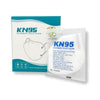 KN95 Respirator Mask, 4 layers, Box of 50 -LP-KN95-001BOX50
$79.00
KN95 Respirator Mask, 4 layers, Box of 50 -LP-KN95-001BOX50
$79.00
-
 Harley N95 NIOSH Certified Particulate Respirator Mask, Folder Style 20/Box - L-188
$36.00
Harley N95 NIOSH Certified Particulate Respirator Mask, Folder Style 20/Box - L-188
$36.00
-
 Lab Pro Mask KN95 (K-N95) Pack of 50 - LP-MASK2-K95 - 40% OFF
$125.00$75.00 -
 Lab Pro 3ply Earloop Disposable Mask (Non-Surgical) (Box of 50) - 84% OFF
$57.00$9.00
-
- Chemicals
- Wipes
-
Hand Tools
Hand Tools
- Gloves
-
Swabs and Applicators
Foam Tipped Swabs
-
ESD & Static Control
ESD & Static Control
- Pipettes
-
Furnaces and Ovens
Furnaces and ovens
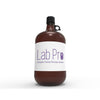
















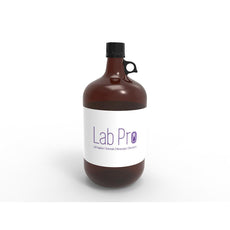
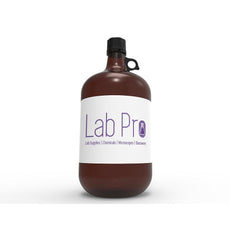
Acetone, ACS Reagent Grade - RSOA0010-500C
$33.05
Description
SHOW MORE
Description
Description
- Key Performance Benefit: Acetone is a polar, aprotic organic solvent. It is a colorless and highly volatile liquid used as a solvent and/or building block in organic syntheses, in pharmaceutical and personal care industries. This grade meets ACS requirements, making it suitable for a wide range of analytical applications.
- Material & Construction: Supplied in neat liquid format. Assay ≥99.5%. Meets or exceeds the standards of the American Chemical Society (ACS). Designed for consistency to deliver replicable and publishable results.
- Risk Reduction/Compliance Benefit: Impurities controlled to: ≤0.0003 meq/g titratable acid, ≤0.0006 meq/g titratable base, ≤0.002% aldehyde as formaldehyde, ≤0.05% isopropanol, ≤0.05% methanol, ≤0.5% water. Evaporation residue ≤0.001%. Meets ACS reagent grade standards for chemical analyses and reactions.
- Protection Level: Explosive limit: 13.2% | Vapor pressure: 184 mmHg (20 °C) | pH: 5–6 (20 °C, 395 g/L)
- Comfort & Usability: Suitable for UV/Vis spectroscopy. Used in routine chemical synthesis, drying, purification, and critical labware cleaning. Pure-Pac® II containers require the Micromatic MacroValve coupler (Z560723) for dispensing solvents.
- Safety & Compliance Assurance: Grade: ACS Reagent | Suitable for EPA 1613 | Quality Level: 200 | Recommended retest period: 2 years
Recommended For
- Organic syntheses (e.g., SN2 reactions, Jones oxidation)
- Mobile phase in thin layer chromatography (TLC)
- Solvent in chemical molecule delivery systems in pharmaceutical and cosmetic industries
- Routine chemical synthesis
- Drying and purification processes
- Critical labware cleaning
Product Details
- Product Name: Acetone, ACS Reagent Grade
- Molecular Formula: C₃H₆O
- Molecular Structure: SMILES: CC(C)=O | InChI: 1S/C3H6O/c1-3(2)4/h1-2H3 | InChI Key: CSCPPACGZOOCGX-UHFFFAOYSA-N
- Grade: ACS Reagent
- Assay: ≥99.5%
- Form: Liquid (Neat)
- Color: Clear, APHA ≤10
- Density: 0.791 g/mL at 25 °C (lit.)
- Melting Point: −94 °C (lit.)
- Vapor Pressure: 184 mmHg (20 °C)
- Explosive Limit: 13.2%
- pH: 5–6 (20 °C, 395 g/L)
- Evaporation Residue: ≤0.001%
- Impurities: ≤0.0003 meq/g titratable acid, ≤0.0006 meq/g titratable base, ≤0.002% aldehyde as formaldehyde, ≤0.05% isopropanol, ≤0.05% methanol, ≤0.5% water
- Storage Temperature: Room temperature
- Shelf Life: Recommended retest period – 2 years
Primary Industries
- Chemical Synthesis
- Pharmaceutical
- Personal Care
- Analytical Laboratories
Standards and Certifications
- Meets or exceeds American Chemical Society (ACS) standards
- Suitable for EPA 1613
- Pure-Pac® is a registered trademark of Merck KGaA, Darmstadt, Germany
FAQs
What does ACS reagent grade mean for laboratory use?
ACS reagent grade indicates the solvent meets purity standards established by the American Chemical Society. These specifications control allowable impurity levels to support analytical accuracy and reproducibility. Laboratories performing regulated testing or publishable research often require ACS-grade solvents to ensure consistent, defensible results.
Why is acetone considered a polar aprotic solvent?
Acetone has a polar carbonyl group that allows it to dissolve many organic and inorganic compounds, yet it lacks acidic hydrogen atoms that participate in hydrogen bonding. This makes it especially useful in reactions like SN2 substitutions, where protic solvents could interfere with reaction efficiency.
Is this acetone suitable for analytical techniques?
Yes, its controlled impurity profile and low evaporation residue make it appropriate for many analytical applications, including chromatography and spectroscopy. High purity helps minimize background interference and improves detection sensitivity, which is important for quantitative measurements and trace-level analysis.
How should acetone be stored in the laboratory?
Acetone should be stored at room temperature in a tightly sealed container, away from ignition sources and incompatible materials. Because it is highly volatile, proper ventilation and storage in approved flammable solvent cabinets are recommended to maintain safety and preserve solvent integrity.
What industries commonly rely on ACS-grade acetone?
ACS-grade acetone is widely used in chemical synthesis, pharmaceutical manufacturing, personal care formulation, and analytical laboratories. Its purity and consistency support research, quality control testing, and production environments where reliable solvent performance is essential.
RELATED PRODUCTS